On this page
Your waiting room is the one part of the practice that every patient passes through, and often the first thing they see beyond the front door. First impressions last, so it pays to give it the same attention as anything else in the practice, if not more. Everything patients see, hear, smell and touch while they're there shapes how they feel about your practice, and what they remember of it.
Key points
- Tell patients roughly how long they'll wait. An uncertain wait feels longer than a known one.
- Give patients some privacy from the front desk, and somewhere else to wait when someone is very unwell.
- Put hand sanitiser and masks where people arrive, and choose seating and toys that wipe clean.
- Keep sound calm and the air clean, not perfumed.
- Swap a tired magazine stack for something fresher, like a take-home copy of your practice newsletter.
Furniture
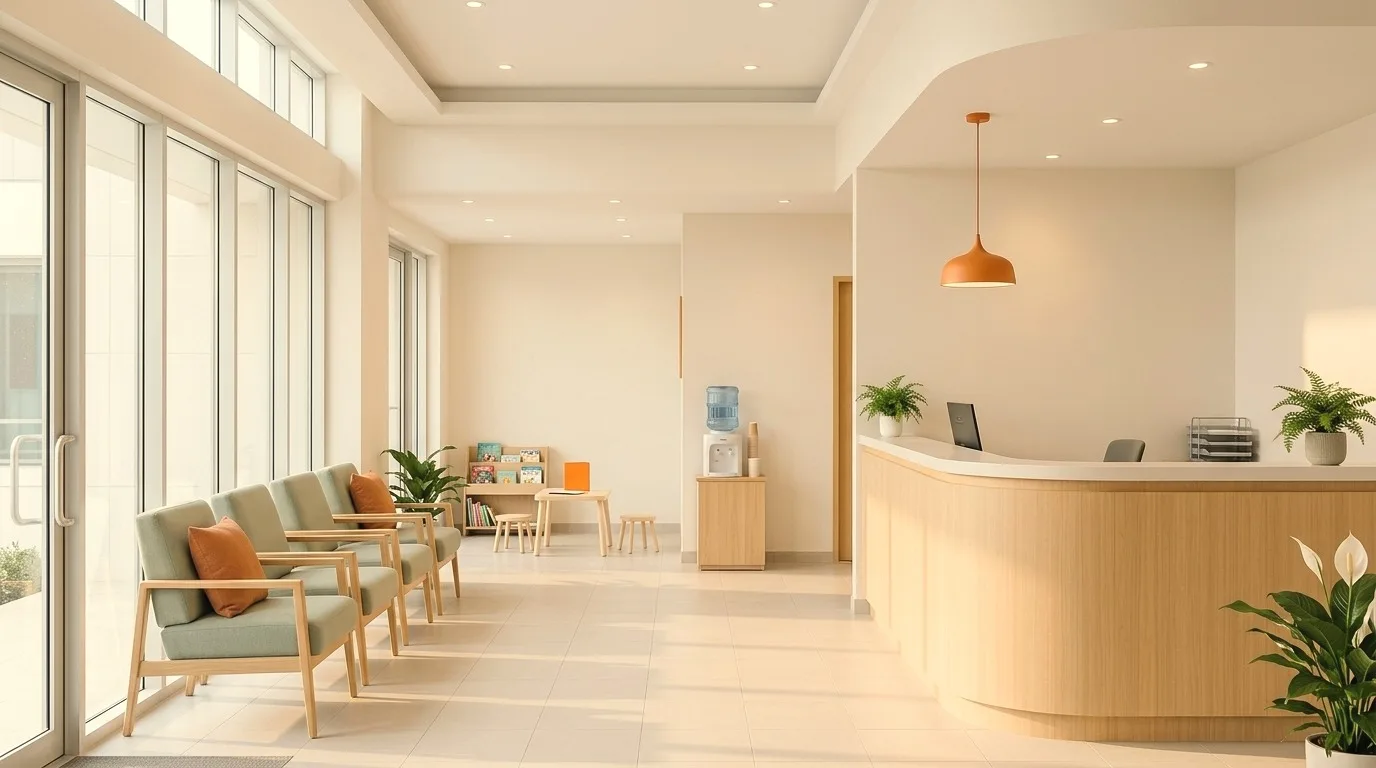
The furniture sets the mood of the room: its size, its shapes, its colours and how well they go together.
You don't have to choose between comfortable and easy to clean. Look for:
- Chairs upholstered in commercial-grade vinyl or wipeable fabric, which wipe down between patients and come in warm colours and timber-look frames, not just hospital grey.
- Timber chairs with seat cushions whose covers come off and go in the wash. They look good and feel homely; keep a spare set of covers so you can swap them straight away after a spill, and choose cushions with a water-resistant inner.
- Some chairs with armrests and a firm, slightly higher seat, which make it easier for older patients and anyone unsteady to sit down and stand up.
- Side tables and benches with laminate or sealed timber tops, which wipe clean and do a lot of the work of making the room look stylish.
Layout
A waiting room brings unwell people into one shared space, so one patient's experience affects everyone else's. Where you can, create some privacy with screens or large potted plants.
Aim for a room that feels spacious without leaving people staring at each other:
- Avoid rows of chairs facing each other across a narrow room. If they have to, put something between them to look at: a low table, plants, a screen with health information.
- Avoid long rows facing the back of the row in front, which feels like waiting for a bus.
- Break seating into small groups, angled slightly apart, along walls or facing a window, with a gap or a side table between chairs where you can.
If you see a lot of families, is there a corner where children can play without disturbing others? Are the toys quiet, and can they be wiped clean regularly?
TipSet up a children's corner with a few things to keep toddlers busy.
Plants
A few healthy plants make a room feel cared for. A dying plant says the opposite, so keep them looking good:
- Choose hardy indoor plants that cope with indoor light and don't drop pollen, and keep them out of reach of small children.
- Use good pots, and top the soil with pebbles so it looks tidy.
- Water when the top few centimetres of soil are dry, not on a fixed day. A cheap moisture meter from a hardware store takes the guesswork out.
- Pull off dead leaves and wipe dust off the rest.
- Give one person the job, on a weekly checklist, so it doesn't fall between the cracks.
Hygiene
Put hand sanitiser and masks at the entrance and at the front desk, where everyone can see them and reach them. Ask patients who may be infectious to tell reception when they arrive, or to call from the car park and wait in the car until you call them in. Choose surfaces, seating and toys that can be wiped down, and clean them on a regular schedule, toys especially: shared toys in waiting rooms have been found to carry bacteria (Charnock, 2005). Keep a simple log of what was cleaned and when, so anyone can see it's been done. The RACGP's infection prevention and control guidelines cover the detail.
Privacy at the front desk
If reception sits in full view and earshot of the room, patients can feel their privacy is gone. Where you can, check patients in somewhere more private before they sit down, and offer another place to wait when someone is very unwell or distressed.
If a separate check-in isn't possible:
- Move the nearest seats back from the desk, and mark a spot where the next person waits.
- Add a screen or acoustic panel beside the desk to soften voices.
- Keep some background music playing, which makes conversations at the desk harder to overhear.
- Ask for sensitive details in writing, or offer to talk somewhere quieter.
Tell patients how long they'll wait
An uncertain wait feels longer than one whose length you know, and an unexplained wait feels longer than an explained one (Maister, 1985). When reception tells patients how long the wait is, or how many people are ahead of them, the time can feel shorter.
TipLet each patient who arrives know how many people are ahead of them.
Colour
Stick to your practice's own colours, so the room feels like part of the same place as your website, signs and letterhead. Even the most basic room feels fresher with a new coat of paint, and an accent wall or some artwork in your colours can lift a room that's all beige or grey.
Sound
Gentle music or natural sounds suit a waiting room better than commercial radio, which brings ads and news headlines into the room. A playlist you choose keeps the sound under your control, and a small Bluetooth speaker tucked out of sight in a corner is all you need to play it.
Playing music to patients counts as a public performance, so it generally needs a music licence. In Australia that's OneMusic Australia's Retail and Service Providers licence, which covers medical centres; a personal streaming account doesn't cover it.
TipIf there's a TV in the room, check regularly what's on, or play health information instead.
Scent
A waiting room should smell clean, not perfumed. Strong scents, from perfume, air fresheners, diffusers or candles, are a common asthma trigger (Asthma Australia), and many people with asthma prefer healthcare settings that are fragrance-free (Steinemann and others, 2018). Keep fragrance out of the room.
Things to read while they wait
Time with nothing to do feels longer than time that's occupied (Maister, 1985), so give people something worth reading.
Most practices still have a magazine stack. If you keep one, go through it regularly and throw out anything dog-eared or out of date. Better still, offer something fresher: a printed copy of your own practice newsletter, which is current, about your practice and its patients' health, and something patients can take home rather than hand on to the next person.
Offer free wifi too, if you can. Most patients will use their own mobile data, but it's a nice touch for anyone with a long wait.
In summary
First impressions, comfort, hygiene, privacy, sound, scent and something to read: a practice manager can change each of them, and together they turn an average waiting room into a better place to wait.
Sources
- Charnock, C. (2005). Swabbing of waiting room magazines reveals only low levels of bacterial contamination. British Journal of General Practice, 55(510), 37–39.
- Maister, D. H. (1985). The psychology of waiting lines. In J. A. Czepiel, M. R. Solomon and C. F. Surprenant (eds), The service encounter. Lexington Books.
- Asthma Australia. Strong smells or scents.
- OneMusic Australia. Retail and Service Providers licence (background music in waiting rooms).
- Australian Government, business.gov.au. Retail and service music licence (lists medical centres among the businesses it covers).
- Steinemann, A., Wheeler, A. J. and Larcombe, A. (2018). Fragranced consumer products: effects on asthmatic Australians. Air Quality, Atmosphere and Health, 11(4), 365–371.
- The Royal Australian College of General Practitioners. Infection prevention and control guidelines.
Next step
Photograph the room patients see first
A free 17-page guide for practice managers: consent, light, framing and the shots your website needs, all on the phone in your pocket.